Technical Articles
In any electrical installation, protection devices are not optional. They are the first line of defence against faults, overloads, and potentially dangerous failures. Among these protective devices, the MCCB holds a particularly important role in low and medium voltage systems.
Yet one situation continues to puzzle many operators and maintenance teams: the unexpected MCCB trip. Equipment shuts down, production stops, and the immediate question becomes obvious, what just happened?
To understand this properly, we need to start from the fundamentals.
What Is MCCB and Why Is It Used?
Before diagnosing problems, it helps to revisit what is MCCB.
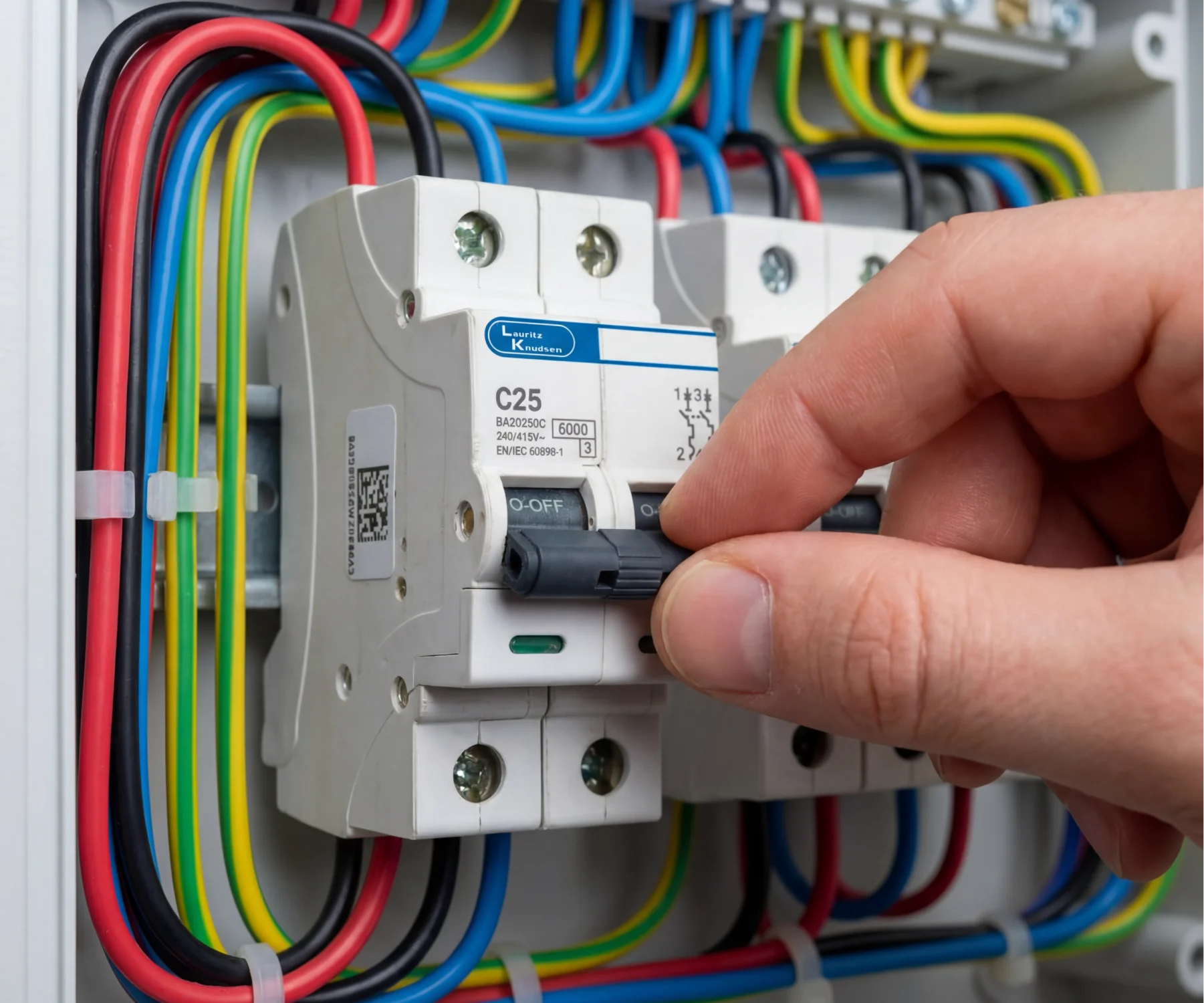
An MCCB, or Moulded Case Circuit Breaker, is an automatic protection device designed to safeguard electrical circuits from overcurrent conditions. Unlike basic circuit breakers, MCCBs are built to handle higher current ratings and offer adjustable protection settings.
They are widely used in:
At its core, an MCCB detects abnormal electrical behaviour and disconnects the circuit before damage occurs.
What Is Tripping in Electrical Protection?
A lot of confusion arises around what is tripping.
Tripping is not a malfunction by default. It is a deliberate protective action. When a breaker senses unsafe electrical conditions, it automatically opens the circuit to prevent overheating, fire hazards, or equipment failure.
So, when an MCCB trip occurs, the device is often doing exactly what it was designed to do. The real task is identifying why it triggered.
Why MCCB Trip Events Should Never Be Ignored
An MCCB rarely trips without reason. Frequent or unexplained tripping usually signals underlying electrical issues.
Ignoring repeated MCCB tripping problem situations can lead to:
Instead of resetting the breaker repeatedly, it is essential to investigate the root cause.
Most Common MCCB Tripping Reasons
Let’s move to the practical side, the typical MCCB tripping reasons seen in electrical systems.
One of the most frequent causes behind an MCCB trip is overload. This happens when the connected load draws more current than the breaker’s configured limit for an extended period.
Possible triggers:
Overloads generate heat, and MCCBs respond by tripping to prevent conductor damage.
Short circuits represent severe fault conditions. Current rises sharply, often within milliseconds.
Typical reasons include:
In such cases, the breaker trips almost instantly according to its MCCB tripping characteristics.
Ground faults occur when current flows unintentionally to earth. These faults may not always produce extremely high currents but still require immediate protection.
Common contributors:
Certain equipment, particularly motors and transformers, draw high inrush currents during startup. If the breaker settings are not coordinated properly, this can trigger nuisance tripping.
Situations to watch:
Electrical panels exposed to poor ventilation or elevated ambient temperatures often experience unwanted tripping.
Heat-related issues arise due to:
Understanding MCCB Tripping Characteristics
Every breaker follows predefined protection behaviour known as MCCB tripping characteristics.
These characteristics determine:
Generally, MCCBs operate through two mechanisms:
Thermal elements react slower, while magnetic elements respond almost immediately.
MCCB Tripping Time and Why It Matters
The concept of MCCB tripping time is critical for system stability.
Tripping time refers to the duration between fault detection and circuit interruption. Proper coordination ensures that only the faulty section is isolated rather than the entire network.
Different faults produce different tripping times:
Understanding MCCB tripping time helps diagnose whether the breaker is reacting correctly.
Why MCCB Trip Events Can Become Frequent
Repeated why MCCB trip scenarios often indicate systemic issues rather than isolated faults.
Patterns usually point to:
Random resets rarely solve these conditions.
How to Investigate an MCCB Tripping Problem
Effective troubleshooting follows a structured approach. Instead of guessing, technicians typically work through logical checks.
Start by evaluating whether connected loads exceed breaker capacity.
Checkpoints:
Physical conditions often reveal hidden problems.
Look for:
Loose or improper connections are surprisingly common causes of MCCB tripping problem situations.
Potential indicators:
Incorrect settings can trigger nuisance trips.
Confirm:
Panel conditions strongly influence breaker performance.
Assess:
Preventing Unwanted MCCB Trip Incidents
While not all trips are avoidable, many can be prevented through careful planning and maintenance.
Preventive practices include:
Preventive maintenance reduces both downtime and safety risks.
When an MCCB Trip Is Actually a Good Sign
Interestingly, an MCCB trip is often evidence that protection mechanisms are working properly. The breaker sacrifices continuity temporarily to protect equipment and infrastructure.
The focus should always remain on cause analysis rather than simply restoring power.
Also Read: Air Circuit Breaker vs. Molded Case Circuit Breaker (MCCB): Key Differences
Closing Thoughts
MCCBs are to protect, not irritate. If the system trips, there is usually something that requires some attention in the system.
Knowing what is MCCB, investigating MCCB tripping causes and identifying MCCB tripping patterns make the operators transition from being reactive resitters to becoming decision makers. The shift causes increased safety and system performance over the years.
Assistance Required?
Select an option to Contact Us

 Contact Us

